

What Small Businesses Need to Know Before and After an ED/IES SBIR Award
The U.S. Department of Education’s SBIR program funds small businesses developing education technology for students, educators, administrators, and other school personnel.
The program is administered by the Institute of Education Sciences (IES). ED/IES uses federal contracts for its SBIR awards, which becomes especially important once a company moves from preparing a proposal to managing the financial side of the project.
This guide covers ED/IES SBIR funding, eligibility, the solicitation process, and the accounting requirements that come with an award.
What Is the ED/IES SBIR Program?
The Department of Education operates its Small Business Innovation Research program through IES. Since 2002, the program has funded the development and evaluation of education technology for schools and other learning environments.
ED/IES-funded products have included assessments, educational games, virtual and augmented reality, AI-based learning tools, simulations, data dashboards, assistive technologies, and other education products. Unlike many federal agencies participating in SBIR, ED/IES does not operate an STTR program.

Who Is Eligible for ED/IES SBIR Funding?
ED/IES SBIR applicants must:
- Be a for-profit small business based in the United States
- Have 500 or fewer employees
- Be at least 51% owned by U.S. citizens or lawfully admitted permanent residents
- Have the principal investigator employed by the small business at least 51% of the time
- Meet the program’s requirements for how much of the project work must be performed by the small business
Universities, nonprofits, consultants, and other organizations may participate as subcontractors or research partners, but the small business must lead the project. Certain small businesses that are majority-owned by multiple venture capital operating companies, hedge funds, or private equity firms may also qualify.
Businesses with affiliates, investors, parent companies, or more complex ownership structures should review the full ED/IES SBIR eligibility requirements and the current solicitation before applying.
How ED/IES SBIR Funding Works
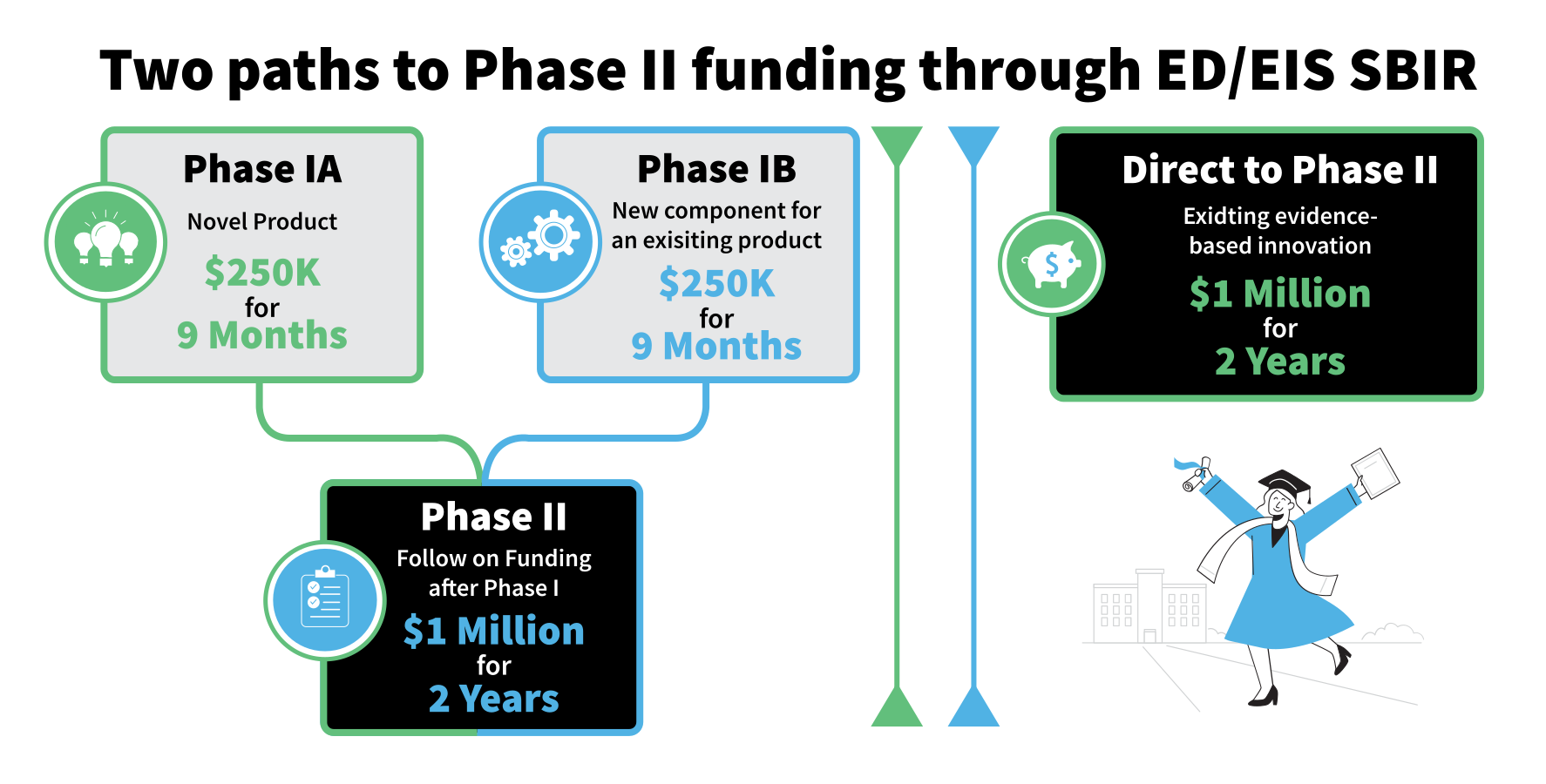
ED/IES currently uses separate Phase IA, Phase IB, and Direct to Phase II solicitations. The right track depends largely on how far the product or underlying research has already progressed.
Phase IA: Developing a Novel Education Technology Product
Phase IA is intended for a new education technology product where little or no technological development has already occurred.
Current Phase I awards provide $250,000 for nine months. Companies that successfully complete Phase I may later compete for a $1 million Phase II award lasting two years, for up to $1.25 million across both phases.
Phase IB: Adding a New Component to an Existing Product
Phase IB is for companies developing a distinct new component that will become part of an existing research-based education technology prototype or product.
Current Phase IB awards provide $250,000 for nine months, with eligible companies able to compete for Phase II funding of up to $1 million over two years.
Direct to Phase II
Direct to Phase II is available for eligible projects that begin with an existing evidence-based innovation and are ready for more substantial product development and evaluation.
Current Direct to Phase II awards provide $1 million over two years. Applicants must meet the eligibility and evidence requirements in the applicable solicitation.
Phase III: Commercialization
Phase III begins after SBIR-funded research and development, when the business moves toward commercialization through sales, investment, partnerships, follow-on contracts, or other funding.
ED/IES does not provide a separate Phase III SBIR award.
How to Apply for ED/IES SBIR Funding

ED/IES SBIR opportunities are issued as federal contract solicitations through SAM.gov, rather than through Grants.gov. Companies need an active SAM.gov registration and Unique Entity Identifier, or UEI, when they submit a proposal, so registration should be completed well before the deadline. The current solicitation also provides the deadline, proposal requirements, evaluation criteria, and submission instructions.
Small Businesses may be able to submit more than one distinct proposal, but the same or substantially similar project cannot be submitted across multiple ED/IES solicitations when the solicitation prohibits it.
If you want to discuss a project with IES, the timing matters. Program staff may be able to discuss program fit before a solicitation opens. Once it is open, federal acquisition rules limit the technical assistance staff can provide to businesses preparing proposals.
ED/IES SBIR Awards Are Federal Contracts
ED/IES differs from many other SBIR programs because its awards are federal contracts. Current Phase I awards use a firm-fixed-price structure, so the solicitation and resulting contract govern billing, documentation, performance, and financial management requirements.
Under a firm-fixed-price contract, the government agrees to pay a fixed price for the work described in the contract. If the company’s costs are higher than expected, the contract price does not automatically increase.

Accounting for an ED/IES SBIR Award
A firm-fixed-price contract still needs good project accounting. The company needs to know what it is spending to perform the work, how labor is being used, what vendors and subcontractors are costing, and whether the project is tracking against the assumptions used when the proposal was priced.
Company-wide financials do not provide that level of detail on their own. Team 80 separates direct project costs, indirect cost pools, and unallowable expenses as part of its standard accounting setup for SBIR and government contract clients.
Have an ED/IES SBIR Award?
If your current accounting does not give you a clear view of labor, project costs, indirect expenses, and contract activity, Team 80 can manage the accounting behind the award.
Track Labor and Project Costs Separately
Labor can be one of the largest costs on an SBIR project, so employee time needs to connect back to payroll and the work being performed. Vendor, consultant, and subcontractor expenses should also be assigned to the correct project and tied to the related invoices and agreements.
This matters on a firm-fixed-price contract because the price does not automatically increase when labor or outside expenses run higher than expected. Having QuickBooks or another bookkeeping system already in place does not necessarily mean the company can see what each project is actually costing. The accounting needs to provide that project-level view.
Direct, Indirect and Unallowable Costs
Direct costs are tied specifically to the ED/IES project and may include project labor, product development, research and evaluation work, or qualifying subcontractor expenses.
Indirect costs are shared across the business and cannot easily be assigned to one project. How they are grouped and allocated depends on the company’s accounting structure and the requirements of the contract.
Unallowable expenses still need to stay in the company’s books, but they should be identified separately so they are not included in contract costs. Those distinctions should already be clear while the project is underway instead of being reconstructed later.
Direct Costs
- Project labor
- Project-specific development
- Research and evaluation work
- Qualifying subcontractor or vendor costs
Indirect Costs
- Shared administrative costs
- Shared operating expenses
Unallowable Costs
- Recorded in the books but kept separate from costs charged to the contract
Account for Subcontractors in the Budget
ED/IES limits how much of the research and development work can be performed outside the small business. For Phase I, the small business generally must perform at least two-thirds of the R&D work, measured by budget expenditures. For Phase II, it must perform at least 50%.

Subcontractor planning affects both the proposal and the accounting. The company should be able to separate its own project activity from work performed by universities, consultants, developers, evaluators, and other outside organizations.
TABA Must Fit Inside the Award
Technical and Business Assistance, or TABA, can be included in an ED/IES SBIR budget for qualifying commercialization services. It does not provide additional funding on top of the contract amount.
Current program guidance allows up to $6,500 in Phase I and $50,000 in Phase II for TABA. Those costs still have to fit within the overall project budget and may include market research, intellectual property work, sales planning, and market validation.
Preparing Your Accounting for Phase II
Moving from a $250,000 Phase I project to a $1 million Phase II contract can mean significantly more financial activity moving through the business. There may be more employees charging time, larger vendor bills, additional subcontractors, and two years of project activity instead of nine months.

Before that happens, the company should be able to answer basic questions without rebuilding the numbers in spreadsheets:
- How much has the project cost so far?
- How much labor has gone into it?
- What has been spent with subcontractors?
- How much of the contract value remains compared with the work still left to complete?
Team 80’s monthly accounting process includes both company-wide financials and project cost reports, so the contract can be reviewed alongside the rest of the business. The team also compares actual indirect rates with the rates used in the budget as operating costs change.
The accounting setup does not need to be complicated, but it does need to keep pace with the added labor, subcontractors, and project costs.
Moving From Phase I to Phase II?
A larger contract can mean more labor, vendors, subcontractors, and costs to track.
Team 80 ED/IES SBIR Accounting Services
ED/IES combines SBIR funding with a federal contracting structure, so the accounting needs to track the project while still giving the business a clear view of the company as a whole.

Team 80’s SBIR and government contract accounting services include:
- Bookkeeping and monthly accounting
- Project cost tracking
- Payroll and labor allocation
- Timekeeping
- Accounts payable
- Direct, indirect, and unallowable cost tracking
- Indirect-rate calculations
Monthly financial - reporting
- Subcontractor and vendor cost tracking
- Accounting as a business moves from Phase I into Phase II
Team 80 brings those activities into the company’s regular monthly accounting rather than waiting until the end of the project to determine where the money went.
For a firm-fixed-price project, that also gives the business a clearer view of what the contract is costing to perform and how those costs are affecting the rest of the company.
Need Help With Your ED/IES SBIR Accounting?

Sarah Sinicki
Team 80 CEO
Sarah is a leader focused on serving small businesses in various industries. She has worked with a multitude of companies over the last 25 years and loves helping business owners find success. Sarah is genuinely committed to unburdening Team 80 clients so that they have the freedom to focus on their business. In her free time, you can find her spending time with her husband, two kids, and her Yorkies, Marley and Ziggy. When she is not helping business owners, you can find her in a Reb3l Groove class dancing it out. Sarah is also an avid Colorado Avalanche fan, so if you ever want to talk about hockey, she’s your gal.

